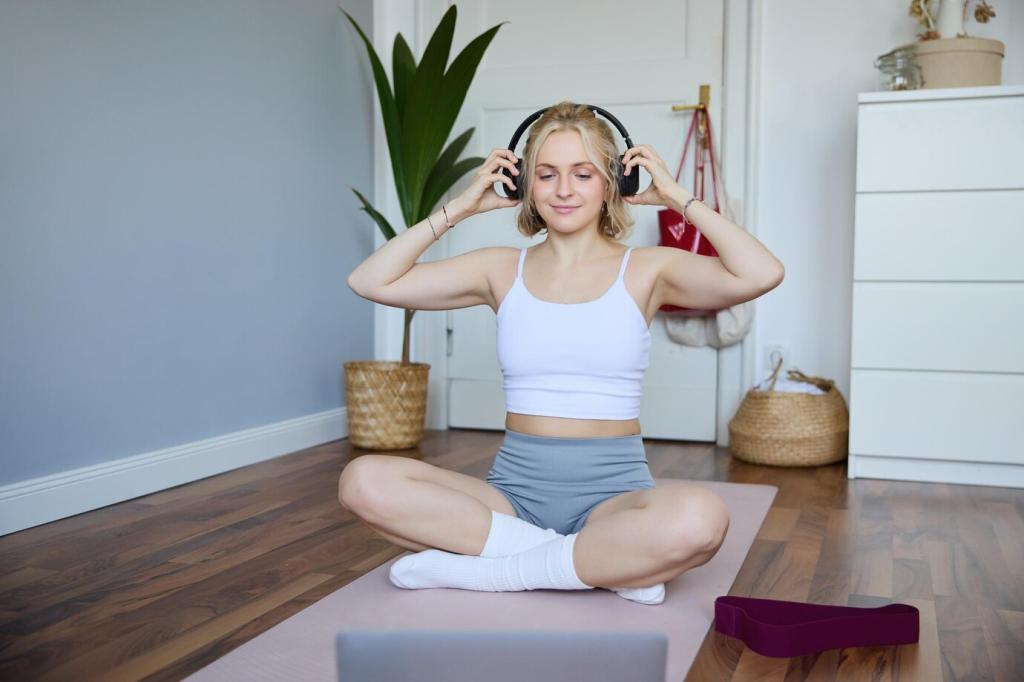
Chosen theme: Breathing Exercises to Boost Workout Results. Discover practical breathing drills that unlock power, endurance, focus, and faster recovery—so every session feels purposeful, efficient, and under your control. Subscribe and share your favorite breathing win to inspire fellow athletes.
When the diaphragm descends, your ribs expand laterally, pressure stabilizes the spine, and movement becomes stronger with less strain. Try a simple test: inhale through your nose, feel your lower ribs widen, then exhale slowly. Notice calmer effort? Tell us what changed.
The Science Behind Better Breathing
As carbon dioxide rises, hemoglobin releases oxygen more readily—the Bohr effect—delivering fuel where muscles need it. Gentle breath-holds and slower exhalations increase comfort with CO2, reducing panic during hard efforts. Track progress, then comment with your best strategies.
Core Breathing Techniques for Everyday Training
Lie prone with forehead on stacked hands. Inhale through your nose into belly and lower back, keeping shoulders quiet; exhale longer than you inhale. Two to three minutes before training builds awareness and stability. Save your notes and tell us what you felt.
Warm-Up Routines That Prime Performance
Supine with knees bent, inhale through your nose to expand lower ribs, then exhale and feel your deep core gently wrap. Practice five cycles, stand up, and repeat bodyweight squats. Notice steadier positions? Tell us which lift felt more confident afterward.
Inhale and brace before the descent, keep pressure through the sticking point, then exhale through exertion. Reset between reps with a calm nasal breath. This protects your spine and sharpens power. Which lift improved most? Share your before-and-after feelings.
During high-intensity intervals, let the work breathe you, then recover with slow, nasal breaths and extended exhales. Aim for a one-to-two work-to-recovery breathing ratio initially. You will re-enter hard efforts calmer. Post your best interval set and breathing plan.
For swimming, use bilateral breathing every three strokes to balance rhythm and reduce neck strain. For rowing, inhale on the recovery and exhale through the drive, keeping breaths quiet and steady. Note split consistency gains and invite questions from teammates.
Measure Progress and Join the Conversation
BOLT Score and CO2 Comfort
After a normal exhale, hold until the first definite urge to breathe; note the seconds. Repeat two to three times and average. Aim for gradual improvement, never straining. Log weekly alongside workouts. Share your trend and what practice moved the needle.
HRV, Readiness, and Morning Breathing
Use a simple HRV app and three to five minutes of coherent breathing around five to six breaths per minute. Notice readiness changes after late sessions. Adjust training accordingly. Comment with your favorite app and whether breathing steadied your mornings.
Your Story Fuels the Next Rep
Last month, a beginner runner named Maya extended her nasal-only jog from six to twenty minutes by adding longer exhales. Her pace steadied, and side stitches vanished. What breakthrough did you notice? Drop a short story so others can benefit today.